

Category: Path of Exile 2

Path of Exile 2 Version 0.3-Storm Wave Invoker Build Explained

The Storm Wave Invoker build in Path of Exile 2 (version 0.3) is a lightning-infused melee archetype that merges explosive elemental bursts with strong defensive control. As a Monk taking the Invoker Ascendancy, you’ll master the Quarterstaff to channel searing arcs of electricity while maintaining exceptional durability. This build performs excellently throughout the campaign and scales impressively into endgame-but it demands sharp timing and awareness. Mastering your buffs, Power Charges, and cooldowns is key to unleashing its true potential.

Lightning damage stands out as one of the most dominant archetypes in Path of Exile 2. The main reason lies in the Shock ailment-afflicted enemies take up to 30% more damage, making it an incredibly potent multiplier for your DPS scaling.Unlock endless possibilities with the power of POE 2 Currency purchased with MMOexp!

Core Mechanics & Skills

The Storm Wave Invoker offense revolves around three primary abilities that create a fluid, electrifying combat loop:

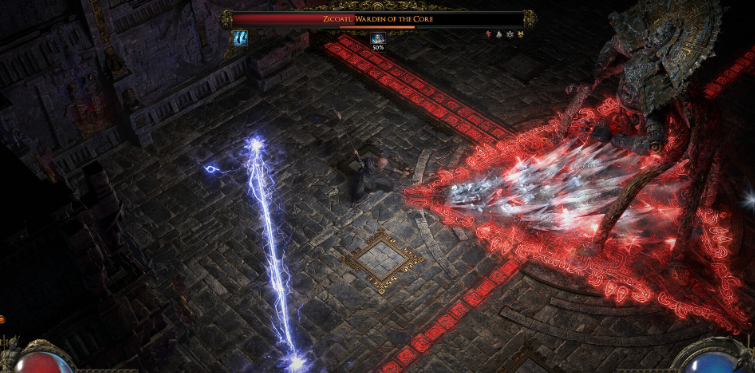
Storm Wave-A melee fissure attack that shocks enemies along a jagged lightning path.

Charged Staff-Grants added Lightning Damage and boosts your melee attacks when Power Charges are consumed.

Herald of Thunder-Calls down bolts of lightning on nearby enemies when you slay a shocked foe with a non-Herald skill.

Together, these form a devastating rotation where every swing, strike, and shock creates chain reactions of lightning destruction across entire packs.

Early Campaign Setup (Levels 1–21)

Since Storm Wave unlocks at Level 22, your early game will rely on cold-based leveling skills. Fortunately, the Monk offers excellent early options that synergize with Quarterstaves-your main weapon of choice.

Recommended Weapon:

Quarterstaff-Aim for one with +Skill Gem Level modifiers.

Unique Option: Pillar of the Caged God (excellent early scaling if you can purchase one early with your first Exalted Orb).

Suggested Early Gem Links:

Glacial Cascade: Rapid Attacks-Cold Attunement

Frost Bomb: Potent Exposure

Tempest Bell: Overabundance-Rage

Herald of Ice: Magnified Area-Cold Attunement

Ice Strike: Rapid Attacks-Cold Attunement

Use Glacial Cascade to freeze mobs, Frost Bomb to detonate them, and Tempest Bell for elites or bosses. This cold-based toolkit will comfortably carry you until Storm Wave becomes available.

Transition to Storm Wave (Level 22+)

At level 22, acquire Storm Wave (via Uncut Skill Gem 7) and fully respec your cold gems into lightning-oriented support gems. This is where the true identity of the build shines.

Mid-Game Gem Links:

Storm Wave: Rapid Attacks-Elemental Armament-Rage-Branching Fissures

Tempest Bell: Overabundance-Close Combat-Elemental Armament

Tempest Flurry: Rapid Attacks-Elemental Armament-Close Combat-Freeze

Herald of Thunder: Elemental Armament-Elemental Focus-Deadly Herald

Charged Staff: Prolonged Duration-Innervate-Elemental Armament

Profane Ritual: Rapid Casting-Compressed Duration-Unleash

Combat Flow

For Clearing Packs:

Open with Storm Wave to shock and obliterate mobs while generating corpses.

Use Profane Ritual to consume those corpses and gain Power Charges.

Activate Charged Staff to supercharge your melee strikes.

For Boss Fights:

Build momentum with Tempest Flurry combos.

Activate Charged Staff and unleash Tempest Bell for devastating single-target bursts.

This build rewards rhythm and precision. Keeping your Herald buffs and Power Charges active ensures constant uptime and explosive bursts of lightning damage.

Gear & Stat Priorities

Defensive Focus (Campaign):

Stack Life, Armor, and Energy Shield.

Ensure capped Resistances and increased Maximum Life for endgame survivability.

Offensive Priorities (Quarterstaff):

Increased % Physical Damage

Added Flat Lightning or Elemental Damage

+Levels to Melee Skill Gems

Increased Attack Speed

Acquiring well-rolled items early-via crafting or trade-can make progression significantly smoother. Investing in POE2 Currency for sale helps you obtain high-value gear such as lightning-based amulets or rare Quarterstaves that align perfectly with your scaling path.

The Storm Wave Invoker in Path of Exile 2 (Patch 0.3) delivers a fast-paced, visually electrifying melee experience. It’s a perfect choice for players who crave high-tempo combat, lightning-themed aesthetics, and skill-based buff management. While not the most beginner-friendly build due to its resource juggling, those who master its flow will find it both rewarding and immensely powerful in both the campaign and the endgame.


Path of Exile 2: Best Ways to Make Currency with Gwennen, Rog, and TujenIn

Path of Exile 2, the Expedition mechanic remains one of the most profitable and flexible systems for crafting and gold-making. While the core Expedition structure hasn’t changed much in Patch 0.3, the introduction of updated Essences and Desecrated Currency has reshaped its value proposition. Instead of focusing purely on high-tier rare item crafting, the Expedition system now shines as a hybrid tool for profit generation, selective crafting, and item optimization.

This guide breaks down the modern Expedition system, offering key insights into NPC functions, crafting strategies, and how to maximize your profit margins through smart use of Expedition currency and supporting mechanics.

Expedition Overview

Although the fundamental system remains unchanged, Expedition crafting in Patch 0.3 has gained more strategic depth thanks to synergy with Essences and Desecrated Currency.

Previously, Expedition was best known for crafting high-end rares using Rog’s enhancement chains. Now, it’s just as effective for gold-making, especially through the purchase and resale of weapons and bases from Gwennen. Players can also buy Gwennen Currency or Exotic Coinage to acquire rare items, then flip them for profit.

Expedition’s flexibility makes it ideal for both early-game currency farming and mid- to late-game item crafting.

Understanding Magic and Rare Path of Exile 2 Items

Before diving into crafting, it’s crucial to understand how item modifiers work:

·Magic items – Up to 2 modifiers: 1 Prefix, 1 Suffix

·Rare items – Up to 6 modifiers: 3 Prefixes, 3 Suffixes

These modifiers are independent, and Expedition crafting allows players to selectively manipulate them. Recognizing when to upgrade a Magic item to Rare-or when to preserve strong individual mods-is central to maximizing crafting efficiency.

Smart players also use Magic items as Essence bases, leveraging deterministic mods from Essences before transitioning into full Rare crafting.

Expedition NPCs and Crafting Options

Expedition revolves around four NPCs, each offering unique item interactions:

1. Dannig – Manages currency exchanges between other NPCs.

2. Gwennen – Focuses on weapons, offering the most profitable crafts.

3. Tujen – Specializes in jewelry, ideal for Amulets, Rings, and Belts.

4. Rog – Enhances armor, providing incremental crafting upgrades.

Each NPC provides a randomized set of actions. Players can:

·Add a single Prefix or Suffix

·Upgrade a Magic item to Rare

·Fill all empty Prefixes or Suffixes

·Reroll Prefixes or Suffixes

·Adjust modifier values (similar to Divine Orbs)

·Remove the weakest modifier

·Remove all Prefixes or Suffixes

However, skipping a crafting step locks you out of skipping the next, requiring careful planning.

General Expedition Crafting Tips

1. Don’t overcommit: If an item doesn’t show potential after several rolls, sell or vendor it instead of wasting materials.

2. Preserve strong mods: When a Prefix or Suffix is excellent, focus on complementing it rather than rerolling everything.

3. Magic item bases matter: Magic items with one or two powerful mods can serve as Essence crafting bases before turning Rare.

4. Improve presentation: Use Quality upgrades, Sockets, or Vaal Orbs to enhance final item value before listing for sale.

These steps ensure you’re not wasting Path of Exile 2 Currency and can consistently profit from crafting sessions.

Gwennen – Weapon Crafting

Gwennen remains the MVP of Expedition in Patch 0.3. Her weapon crafts-especially bows, staves, and two-handed maces-dominate the meta due to their high resale potential.

Weapon Tips:

·Bows: Focus on high %Physical Damage, flat Physical Damage, and Accuracy.

·Quarterstaves, Spears, and 2H Maces: Target %Physical Damage and high base Quality for endgame builds.

·Wands & Staves: Prioritize +Levels to Skills (Wands: +4+, Staves: +5+).

·Scepters: Seek +Minion Skills or high Spirit stats-ideal for caster builds.

·Quivers: Craft only those with +Projectile Skill levels, as these are in high demand.

Buying Path of Exile 2 Items or bases from Gwennen using Exotic Coinage can yield significant returns when combined with Essence crafting or targeted rerolling.

Tujen – Jewelry Crafting

Tujen specializes in crafting Amulets, Rings, and Belts, each of which can provide strong stat foundations or utility bonuses.

Jewelry Tips:

·Amulets: Prioritize +Levels, Attributes, and high base values. Non-elemental varieties (Crimson, Lunar, Azure) tend to yield better crafting outcomes.

·Rings: Choose good implicit bases (Life, Resists, Mana). Magic Rings with two solid modifiers can be expanded with Essences or Exalted Orbs.

·Belts: Focus on Life, Mana, Attributes, and Resists. High-quality Magic belts are excellent candidates for Desecrated Currency upgrades.

While Tujen’s investment cost is slightly higher, well-crafted jewelry remains highly liquid on the trade market, especially if you buy POE2 Currency in bulk to fund repeated crafting attempts.

Rog – Armor Crafting

Rog deals primarily with armor pieces, including chests, helmets, boots, gloves, and shields. His crafting potential depends on your build’s defense type.

Armor Tips:

·Evasion or Hybrid (Evasion + ES): Prioritize Life, Resists, and Dexterity-based stats.

·Energy Shield armor: Seek out high-ES bases, targeting both %ES and flat ES mods.

·Armor Shields: Focus on high Armor, Life, Block, and Strength-based stats.

Rog crafting can produce solid defensive gear for personal use, though its profit margins are lower than Gwennen’s weapon crafts.

Profitability Breakdown

Based on community data and patch testing:

·Gwennen: Highest profit per investment. Bows and two-handers regularly sell for multiple Divines.

·Rog: Mid-tier profitability, better for personal gear or niche resists-based crafting.

·Tujen: High-end jewelry crafts require heavier currency investment but yield great long-term profit.

Combining Expedition crafts with Desecrated Currency boosts modifier tiers and ensures better resale consistency.

When to Use Exalted Orbs

Exalted Orbs are best reserved for finishing touches on strong items. Use them when:

·The item already has 1-2 strong Physical mods with open Prefixes.

·ES armor has perfect base rolls and needs final affixes.

·Jewelry already includes Life, Mana, and Resistances with space for an Attribute mod.

Since the price of buying POE 2 Exalted Orbs has dropped compared to Divine Orbs, stocking up on Exalts for crafting sessions is more cost-effective than ever.

Conclusion

Expedition crafting in Path of Exile 2 represents the perfect blend of strategic item optimization and gold-making. By combining Expedition currencies, Essences, and Desecrated Currency, players can consistently generate profit while improving their gear.

Focus on Gwennen for high-value weapon crafts, Tujen for long-term jewelry investments, and Rog for durable armor options. Always preserve strong modifiers, avoid overcommitting to bad rolls, and capitalize on market trends to sell your crafted items efficiently.

Whether you’re crafting to sell or improving your personal loadout, Expedition remains one of the best currency-generating systems in Path of Exile 2-and one of the most enjoyable ways to play the economy.

Path of Exile 2: Ultimate Guide to Increasing Your Maximum Mana

In Path of Exile 2, mana is more than just a resource—it’s the backbone of every spell and ability in your arsenal. Whether you’re summoning a storm of elemental destruction or shielding yourself from deadly blows, a healthy mana pool determines how long you can stay in the fight. Increasing your maximum mana isn’t just a luxury—it’s a necessity for sustained performance in high-pressure encounters.

Here’s how to expand your mana pool and keep your power flowing throughout even the most grueling battles.

Why a Larger Mana Pool Matters

Spellcasting Endurance

High-intensity builds burn through mana fast. A larger pool lets you chain-cast powerful spells without running dry mid-fight.

Defensive Uptime

Skills like auras, barriers, and buffs all consume mana. The bigger your reserve, the longer your defenses stay active when it matters most.

Build Flexibility

More mana allows you to experiment with high-cost spells, multi-skill rotations, or hybrid damage setups that would otherwise be unsustainable.

Core Methods to Increase Maximum Mana

1.Stack Intelligence

Each point of Intelligence increases your maximum mana by 2. This makes Intelligence a foundational stat for casters and mana-reliant builds.

Invest in Intelligence during level-ups and select Intelligence-rich regions on the passive skill tree.

2.Optimize Your Gear

Certain item slots offer excellent opportunities to expand your mana reserves:

Rings & Amulets: Look for affixes like “+X to maximum Mana” or implicit bonuses from base types like Paua Rings. These are often the most accessible sources of flat mana boosts.

Helmets, Chests & Gloves: Energy Shield-based gear often comes with mana bonuses or synergizes with caster playstyles. Prioritize gear with prefixes that increase mana or hybrid bonuses like “Intelligence + Mana.”

Weapons (Wands, Staves): Many caster weapons grant flat mana, increased mana, or Intelligence. They’re also prime candidates for crafted suffixes that boost maximum mana or mana regeneration.

Crafting Tools: Use orbs or essences (such as Essence of Woe or Essence of Spite) to modify your gear toward mana-enhancing stats.Boost your gaming experience with instant POE 2 Currency purchased with MMOexp.

3.Tap into the Passive Skill Tree

The passive tree offers a variety of ways to enhance your mana pool:

Basic Mana Nodes: Scattered throughout the tree, especially near Intelligence-heavy classes like Witch or Templar.

Mana Clusters: Specialized clusters provide flat mana, % increased mana, or mana regeneration—some even grant hybrid benefits like spell damage scaling with mana.

Key Passives: Consider Mind Over Matter, which allows a portion of incoming damage to be taken from mana before life—an excellent option for survivability-focused builds.

4.Leverage Ascendancy Bonuses

Ascendancy classes offer powerful enhancements tied to mana:

Elementalist / Occultist (Witch): Often gain mana-related benefits through elemental or curse-based synergies.

Hierophant (Templar): Offers some of the best mana mechanics in the game, including flat mana boosts, regeneration, and even synergy with Mind Over Matter.

Pathfinder (Ranger): Grants flask enhancements that help with resource sustain, including mana regeneration and recovery rate boosts.

5.Slot in Mana-Boosting Jewels

Jewels are a flexible way to customize your build and support mana growth:

Standard Jewels: Seek modifiers like “+X to maximum Mana,” “% increased maximum Mana,” or “Mana Regeneration Rate.”

Abyss Jewels: Can roll flat mana along with utility stats like cast speed or life.

Cluster Jewels: Medium and large clusters can offer mana-themed notables and support deeper specialization.

6.Use the Right Flasks

Flasks are your emergency refueling station:

Mana Flasks: Restore mana instantly or over time. Use flasks with suffixes like of the Scholar (increased recovery rate) or of Warding (resistances + curse immunity).

Hybrid Flasks: Combine mana and life restoration in a single flask—great for mana-based Mind Over Matter builds.

Utility Flasks: Some unique utility flasks or crafted ones offer passive mana regen or casting speed buffs.

7.Incorporate Mana-Focused Support Gems

Certain support gems help reduce mana strain or directly impact your mana pool:

Reduced Mana Cost / Lifetap Support: Lowers the cost of linked active skills.

Arcane Surge Support: Grants mana regeneration and cast speed bonuses after spending a set amount of mana—perfect for burst-heavy builds.

Building up your maximum mana in Path of Exile 2 is all about synergy. Stack Intelligence, optimize your gear, select smart passive nodes, and use tools like flasks and jewels to round out your strategy. Power up your builds – get cheap POE 2 Orbs from MMOexp.

What to Do With the Glorious Idol in Path of Exile 2

In the ever-expanding world of Path of Exile 2, where every quest and item can significantly impact your journey, the Glorious Idol is one such item that stands out. This unique relic, introduced during the Legacy of the Vaal questline, serves as both a pivotal quest item and a valuable asset for those looking to fill their pockets with POE 2 Currency. In this guide, we’ll explore where to find the Glorious Idol, what to do with it once you’ve acquired it, and how to profit from it—if you’re willing to mess with the timeline, that is.

Where to Find the Glorious Idol

The Glorious Idol is an item you can only acquire during the Legacy of the Vaal questline in Path of Exile 2. This quest takes you to Utzaal, the ancient, decaying version of The Drowned City found in Act Three. It’s a zone that challenges both your combat skills and your wits.

While exploring Utzaal, you’ll eventually stumble upon a treasure room—look for one behind one of at least two locked doors you’ll encounter. Inside the room, the Glorious Idol awaits, sitting unguarded on a stone desk. It’s a striking piece that stands out in the otherwise dreary ruins. Although you’ll find other idols during your journey—such as the Exceptional Idol, Exquisite Idol, and Grand Idol—the Glorious Idol is by far the most valuable.

What to Do With the Glorious Idol

Once you’ve got the Glorious Idol in your inventory, you may wonder what to do with it. Do you hold onto it for its story implications, or do you sell it for a hefty amount of gold? In Path of Exile 2, idols such as this one are generally worth a significant amount of POE 2 Currency. You can sell it for a generous payout, making it a perfect item for players looking to bulk up their finances.

Sell It for Gold

The most straightforward use for the Glorious Idol is selling it to Oswald, a merchant specializing in rare artifacts. Here’s a breakdown of what you can expect to earn from selling the various idols found in Utzaal:

    Glorious Idol: 1,500 gold

    Exceptional Idol: 1,500 gold

    Elegant Idol: 1,000 gold

    Grand Idol: 500 gold

The Glorious Idol fetches the highest price at 1,500 gold, making it the most lucrative idol to find. If your goal is to quickly boost your POE 2 Currency, selling the Glorious Idol is your best bet.

However, while the Glorious Idol itself is valuable, don’t overlook the other idols. Collecting multiple idols over your time in Utzaal and selling them to Oswald can still result in a solid payday. But as with any market, keep in mind that prices can fluctuate, and the POE 2 Currency economy is always shifting.

The Timeline Twist: Priceless

While you could easily cash in the Glorious Idol for a significant amount of gold, there’s a more philosophical—and risky—side to this relic: altering the timeline.

In Path of Exile 2, redistributing ancient artifacts like the Glorious Idol through time might have unforeseen consequences. By changing the past, you could potentially unlock new storylines, alter the fate of entire factions, or open up secret areas that were once sealed away. Messing with time can be priceless, offering rewards beyond gold but requiring careful consideration.

The act of using the Glorious Idol to manipulate history could lead to unforeseen consequences. Whether you unlock new powerful abilities, trigger a catastrophic event, or create an alliance with long-forgotten factions, your actions may ripple through the timeline in unexpected ways. But beware—manipulating the past comes at a cost. Just how much you’re willing to sacrifice (or gain) by altering history is up to you.

The Best Use

The decision of what to do with the Glorious Idol boils down to your personal playstyle. If you’re in it for the quick profit, selling the idol to Oswald for 1,500 gold is the way to go. It’s a simple, efficient way to boost your POE 2 Currency reserves. But for those who enjoy digging into the lore of Path of Exile 2 and exploring the deeper mysteries of time travel, holding onto the idol for its narrative potential could be far more rewarding in the long run.

Will you take the gold and move on, or will you choose to delve into the potential chaos of messing with time?

Conclusion

The Glorious Idol is a prime example of the unique and impactful items found in Path of Exile 2. Whether you’re looking to maximize your POE 2 Currency by selling it for a generous gold payout, or if you’re more intrigued by the implications of altering the timeline, this idol provides a rich layer of choices and consequences for your adventure. In the end, it’s up to you to decide: is it just another valuable artifact to sell, or is it a key to unlocking the greater mysteries of the past?

The choice is yours, but remember—tampering with time may just be the most valuable decision of all.

Path of Exile 2: Profitable Essence Farming Strategy

Welcome to our in-depth look into an efficient and profitable essence farming strategy in Path of Exile 2. In this article, we’ll be walking through the process, discussing the cost, profit, setup, and strategies used to maximize your rewards while farming essences. Whether you’re a seasoned player looking to maximize your earnings or someone new to the game trying to learn about effective farming methods, this guide will cover everything you need to know to succeed.

Introduction to Essence Farming

Essences in Path of Exile 2 serve a critical role in item crafting. They can be used to imbue gear with powerful modifiers, making them a highly sought-after POE 2 Currency. In this strategy, we will specifically focus on farming essences that can be corrupted into powerful variants for optimal profits. This method is effective because it maximizes both your time and the returns on the essences you collect.

In the following sections, we’ll outline the costs involved, explain the farming setup, and give you all the details you need to understand why this strategy is so profitable.

Understanding the Strategy: Cost and Profit

The Investment

For this strategy, the total investment was calculated for 20 maps, which took approximately one hour to complete. Let’s break down the costs:

·Essence Scarabs: These are essential for increasing the number of essences that spawn in your maps. You will be using a variety of essence scarabs, such as:

  o Essence Scarab of Adaptation

  o Essence Scarab of Ascent

  o Essence Scarab of Stability

  o Essence Scarab of Calcification

  o Essence Scarab of Adversaries

·Remnant of Corruption: In total, 130 of these were purchased. These items are used to corrupt the essences, potentially turning them into more valuable or higher-tier essences. While not all 130 were used, they’re a critical component in making the strategy work.

·Life Force: This resource is used to upgrade bad essences to better ones, improving the overall quality of your essences. You’ll spend approximately 2 divines on Life Force to upgrade essences during your farming session.

·Map Crafting Devices: Each map will cost 6 chaos to apply the crafting mods that make essences more valuable. Given that 20 maps are run, the total crafting cost comes to 120 chaos.

Total Costs

·Essence Scarabs and Map Mods: The total cost of the scarabs and crafting mods is 4.53 divines and 431 chaos (using an exchange rate of 170 chaos per divine).

·Total Investment: With all these costs considered, your total investment comes out to about 4.53 divines for a one-hour farming session.

The Returns

Once all the maps are completed and essences are sold or turned into higher-tier versions, the total profit is calculated. After using Life Force and liquidating all essences into chaos and divines, the total profit for this 1-hour farming strategy comes out to:

·Total Profit: 14.23 divines in one hour

So, for every 4.53 divines spent, you will earn approximately 14.23 divines, resulting in a solid profit margin in just an hour.

The Farming Setup

Now that we’ve discussed the costs and potential profits, let’s dive into the setup and strategy used to achieve this level of success. This includes the use of scarabs, crafting mods, the ideal mod setup, and the essence corruption process.

Key Mods to Focus On

In order to maximize the number of essences you get, you need to ensure your maps are well-prepared. The goal is to increase the quantity and tier of the essences by using specific mods and equipment. Here are the critical mods to look for when setting up your maps:

1. Imprisoned Monsters Contain Essences at the Highest Possible Tier:

    o This mod ensures that imprisoned monsters in your maps have the highest possible tier of essences, allowing you to get the most valuable drops.

2. Additional Imprisoned Monsters:

    o This mod increases the number of imprisoned monsters in your maps, which directly increases the number of essences you can acquire.

3. Chance for Imprisoned Monsters to Contain Three Additional Essences:

    o This mod provides a chance for each imprisoned monster to contain multiple essences, further boosting the overall essence count.

4. Chance for Imprisoned Monsters to Contain an Additional Essence:

    o Another mod that increases the chances of finding more essences on imprisoned monsters, further improving your farming efficiency.

5. Map Boss: Essence Mod from Imprisoned Monsters:

    o This mod adds a random essence modifier from imprisoned monsters slain in your maps to the map boss. While optional, it can increase the strength of the map boss, making it more challenging but also rewarding in terms of essence drops Exalted Orbs.

Ideal Maps and Essences to Focus On

In this strategy, the primary focus is on Med’s Essence. These essences (Misery, Envy, Dread, and Scorn) have a chance to corrupt into even more powerful variants, which are:

·Insanity

·Horror

·Delirium

·Hysteria

These corrupted essences are highly valuable, as they can be used to craft high-tier gear with substantial modifiers.

The Farming Process

The key to efficient essence farming is knowing when and how to corrupt essences. The process is relatively straightforward:

1. Identify the Med’s Essences: Start by examining the essences of the monsters in your maps. Look for the Med’s essences (Misery, Envy, Dread, Scorn) because these have the potential to corrupt into the more valuable Insanity, Horror, Delirium, and Hysteria essences.

2. Corrupt the Essences: Using the Remnants of Corruption, corrupt these essences to turn them into one of the high-tier variants. For example, if you find an essence of Misery, corrupt it with a Remnant of Corruption in the hopes of turning it into Insanity, which is one of the most desirable essences.

3. Check for Duplicates: Occasionally, essences can be duplicated, meaning one of the essences that have already been corrupted can carry over to other imprisoned monsters or even the map boss itself. This is a highly profitable scenario and adds to the excitement and reward of essence farming.

4. Map Boss Loot: After clearing the map, the boss will drop its loot, including the essences that have been transferred or corrupted by the imprisoned monsters. This is where your hard work pays off.

Map Layout and Efficiency

The layout of your maps plays a significant role in how efficiently you can complete the farming process. Certain map layouts may have more imprisoned monsters, which leads to more essences being available for corruption. The more quickly you can clear these maps, the more profitable your session will be.

Conclusion

The essence farming strategy outlined in this article is one of the most effective and rewarding ways to farm in Path of Exile 2. By focusing on high-tier essences and corrupting them into even more valuable variants, you can significantly boost your profits in just an hour of gameplay. The investment in scarabs, crafting mods, and Remnants of Corruption pays off quickly, making this method ideal for players looking to maximize their Path of Exile 2 Currency for sale gains in Path of Exile 2.

By following the strategies outlined here, you’ll be able to optimize your time and resources, ensuring that your farming sessions are both efficient and profitable. Whether you’re a casual player or a dedicated farmer, this method will help you acquire valuable essences and craft powerful gear to further progress in the game.

Sorrow Among Stones – Path of Exile 2 Guide

Path of Exile 2 is one of the most eagerly awaited expansions in the action RPG genre, and with it comes a plethora of new content, including quests, areas, characters, and mechanics. Among the many quests in the game, one of the most poignant and engaging is the “Sorrow Among Stones” quest. This narrative-driven adventure blends lore, exploration, and intense combat in a way that feels both fresh and familiar to fans of the Path of Exile series.

In this guide, we will take an in-depth look at the “Sorrow Among Stones” quest. We’ll explore its storyline, objectives, key locations, the challenges you will face, the rewards, and how this quest fits into the broader Path of Exile 2 experience. Whether you’re new to Path of Exile or a veteran of the first game, this guide will provide everything you need to know to tackle this hauntingly beautiful quest.

Introduction to the “Sorrow Among Stones” Quest

The “Sorrow Among Stones” quest in Poe 2 trade begins when the player is summoned to a secluded region, the Forgotten Vale, which is filled with ancient stone structures, eerie landscapes, and the remnants of long-lost civilizations. The region’s history is steeped in tragedy, and the quest takes players through its haunting past while they unravel the mystery behind the stone monoliths that dot the landscape.

In the quest, the player will uncover the story of a once-prosperous people who fell victim to a cataclysmic event, leaving only stone remnants as markers of their sorrow. As the quest unfolds, the player discovers that these monoliths hold deep magical secrets—secrets that have the potential to shift the balance of power in Wraeclast itself.

The main objective of the quest is not only to uncover the mysteries of the Forgotten Vale but also to prevent a dark force from resurrecting the power of the ancient civilization and bringing ruin to the world.

The Forgotten Vale – A Place of Mystery and Tragedy

The Forgotten Vale is a location that players will visit early in Path of Exile 2. It’s a desolate, misty valley scattered with monolithic stone structures and ancient ruins. The region has a mournful atmosphere, with overgrown trees and cracked stone paths, remnants of a once-thriving civilization that is now lost to time.

The monoliths that populate the landscape are not ordinary stone markers. These structures hold the magical essence of the people who once lived in the valley. Players will encounter stone-carved messages, murals, and cryptic symbols that hint at the rise and fall of the ancient civilization. As the quest progresses, the player will be tasked with deciphering the meaning behind these stone structures, unlocking their secrets and discovering what really happened to the people who built them.

In addition to uncovering the story of the valley, players will also have to contend with the dangers lurking within. The area is home to several hostile creatures, including cursed beasts, spirits of the fallen civilization, and otherworldly monsters drawn to the lingering magic. The Forgotten Vale is a place of sorrow, but also one of tremendous power.

Main Objectives of the Quest

The “Sorrow Among Stones” quest is divided into several stages, each with its own set of challenges and discoveries. Here is a breakdown of the primary objectives players will need to complete:

1. Investigating the Monoliths

The first step of the quest is to investigate the monolithic structures scattered across the Forgotten Vale. These stones are not just markers—they are imbued with ancient magic. The player must search for hidden inscriptions and symbols on these stones to uncover their true significance. Players will need to solve puzzles that unlock the next stage of the quest.

Some of the monoliths contain hidden messages in ancient runes, which the player will need to decipher. These puzzles involve logic, pattern recognition, and sometimes even environmental clues scattered around the area. These inscriptions tell the story of the civilization that once thrived in the Vale, hinting at their downfall.

2. Confronting the Cursed Guardians

As players explore the Forgotten Vale, they will encounter powerful cursed guardians—once the protectors of the ancient civilization, now twisted by dark magic. These creatures are formidable bosses, each one a unique challenge in its own right.

The guardians are typically large, imposing monsters that will require skillful combat tactics to defeat. Some may summon waves of dark energy, while others will call forth smaller minions to overwhelm the player. Learning the attack patterns and weaknesses of each guardian is crucial, as many of these creatures are resistant to standard forms of attack.

Defeating each guardian will grant the player powerful items and help unlock deeper sections of the Forgotten Vale. Some of the guardians may also drop lore fragments that shed light on the civilization’s downfall.

3. Uncovering the Lost Ritual

As players progress through the quest, they will discover that the downfall of the ancient civilization was caused by a dark ritual gone wrong. The people of the Forgotten Vale attempted to summon an ancient entity, but their ritual spiraled out of control, leading to their destruction.

The quest’s next major objective is to uncover the details of this ritual. The player will need to search through hidden libraries, decipher fragmented texts, and engage with the spirits of the fallen to learn more about what happened. These steps reveal the chilling truth behind the ritual, and players will begin to realize that the ritual’s power is still lingering in the Vale.

This discovery leads to the ultimate conflict in the quest, as players are tasked with preventing the rebirth of the dark entity. However, there is a catch—the player will also have the option to use the ritual’s power for their own benefit, which can significantly alter the course of the game’s narrative.

4. Preventing the Resurrection of the Dark Entity

The final stage of the quest revolves around the resurrection of the dark entity tied to the cursed ritual. Players must journey to the heart of the Forgotten Vale and enter the site of the ancient ritual—a place where the fabric of reality is thin and the powers of the dark magic are strongest.

Here, the player will face off against the resurrected dark entity and its followers. The boss battle is intense, with the entity able to manipulate the environment and summon devastating attacks. The player must overcome the entity’s minions and defeat it before it can unleash its full power on Wraeclast.

After defeating the entity, the player will have to make a choice: destroy the remaining dark energy once and for all, or harness its power for themselves. This choice will have far-reaching consequences for the player’s character and the world around them.

Challenges and Combat

The “Sorrow Among Stones” quest is full of challenges that test both the player’s combat abilities and problem-solving skills. In addition to the tough guardians and bosses, the environment itself is filled with hazards. Players will have to navigate through areas filled with traps, crumbling bridges, and shifting terrain. The monsters in the Forgotten Vale are not only dangerous in battle, but they also use the environment to their advantage, making each encounter feel fresh and unpredictable.

One of the most notable challenges in this quest is the powerful “Stone Spirits” that roam the region. These ethereal enemies can phase in and out of the stone walls and floors, making them difficult to track and fight. Players will need to adapt quickly, using abilities that can affect these spirits, such as spells with area-of-effect damage or abilities that can reveal hidden foes.

Rewards

The “Sorrow Among Stones” quest is rich in rewards, offering players some of the most powerful items and equipment in Path of Exile 2. Some of the rewards include:

Ancient Artifacts: Unique items that provide powerful buffs and enhance the player’s abilities. These items may also have lore-based effects that tie into the quest’s narrative.

Skill Gems: Rare skill gems that grant players access to new, powerful abilities. Some of these gems are directly tied to the ancient civilization and its rituals.

Lore Unlocks: As the player uncovers the secrets of the Forgotten Vale, they gain insight into the history of the region and the larger world of Path of Exile 2.

Endgame Currency: cheap POE 2 Currency that allow players to enhance their equipment or unlock new crafting options.

Conclusion

The “Sorrow Among Stones” quest is a pivotal moment in Path of Exile 2, combining narrative depth, challenging combat, and impactful choices. Set in the mysterious Forgotten Vale, the quest explores the tragic history of an ancient civilization, blending lore with intense exploration and combat. Players will be tested in their ability to solve puzzles, defeat powerful enemies, and make tough moral decisions.

The quest is not only an exciting and rewarding journey in its own right but also provides essential context for the larger world of Path of Exile 2. As players venture through the Forgotten Vale, they will come to understand more about the forces at play in Wraeclast, shaping their future actions and the fate of the world itself.

Whether you’re looking to experience the rich lore, face off against challenging bosses, or reap the incredible rewards, the “Sorrow Among Stones” quest is an adventure you won’t want to miss.

The complex level scaling system in Path of Exile 2

Path of Exile 2, the highly anticipated sequel to the iconic action RPG, brings a host of new mechanics, including an intricate level-scaling system. This feature significantly impacts gameplay, particularly in party settings, by balancing the experience for characters of varying levels. Here’s a deep dive into how level scaling works and how it influences progression, combat, and teamwork.

Level scaling in Path of Exile 2 is designed to ensure that players of different levels can engage in the game together without creating an imbalanced or one-sided experience. The system adjusts the power of higher-level characters to align more closely with the lowest-level character in the party, fostering a more cooperative and fair environment.

How It Works

1.Level Scaling Enabled

    When the party leader enables level scaling, the system adjusts higher-level characters to match the level of the lowest party member. For example, if a level 80 character joins a party with a level 40 player, the level 80 character is temporarily scaled down closer to level 40 for the duration of the session.

    Key Points:

    There is no penalty to the higher-level player experience gain. However, they will only earn XP proportional to what lower-level enemies typically drop.Change the way you play with POE 2 Currency trading with MMOexp.

    This adjustment ensures that all players contribute meaningfully to combat and no single character overpowers the game, creating a balanced challenge for the party.

    2.Level Scaling Disabled

      If the party leader disables level scaling, all characters retain their original levels and stats. This option offers a drastically different experience:

      Lower-level players face much stronger enemies without any adjustments to balance the difficulty.

      Characters who fight enemies significantly above their level will earn reduced experience points (XP), making it harder to progress efficiently.

      While this option allows higher-level characters to dominate content, it can leave lower-level players struggling to contribute or keep up.

      Every zone in Path of Exile 2 is designed with a specific enemy level or level range. This area level acts as a guide for players, indicating the ideal character level needed to tackle its challenges.

      When Level Scaling Is Enabled:

      Players can explore areas more freely, as the scaling system ensures everyone in the party can participate effectively, regardless of individual level differences.

      When Level Scaling Is Disabled:

      Party members should be mindful of area levels and adjust their plans accordingly. For instance, a zone requiring level 50 enemies will be far more punishing for level 30 players if scaling is off.

      Advantages and Drawbacks of Level Scaling

      Enabling Level Scaling

      Pros:

      Ensures inclusivity, allowing lower-level players to contribute to the party.

      Prevents high-level characters from trivializing encounters.

      Creates a cohesive, balanced challenge for the entire group.

      Cons:

      Higher-level characters earn less XP than they would in zones designed for their actual level.

      Scaling down may reduce the satisfaction of overpowering enemies.
      Disabling Level Scaling

      Pros:

      Higher-level characters can clear content more quickly, ideal for farming and grinding.

      Players retain their original power levels and do not experience stat adjustments.

      Cons:

      Lower-level characters may struggle to survive or progress efficiently.

      The disparity in contribution can make the experience less enjoyable for some party members.

      Choosing whether to enable or disable level scaling depends on party composition and goals.

      For Mixed-Level Parties:

      Enabling scaling is typically the better choice, as it allows all players to engage meaningfully in combat and enjoy the experience together.

      For High-Level Farming Runs:

      Disabling scaling might be more efficient, especially when most or all party members are close to the area level. However, this approach can exclude lower-level players from effectively participating.Get your buy Path of Exile 2 Currency instantly at MMOexp today!

      Level scaling in Path of Exile 2 adds depth and flexibility to the party system, offering players the choice to tailor their gameplay experience. By understanding how scaling impacts progression and teamwork, players can make informed decisions that enhance their enjoyment and efficiency.

      Whether you prioritize fairness and inclusion with scaling or seek unrestrained power with it disabled, mastering this mechanic is essential for thriving in the ever-challenging world of Path of Exile 2.

      Powered by WordPress & Theme by Anders Norén